Straight reach planning in central Iowa
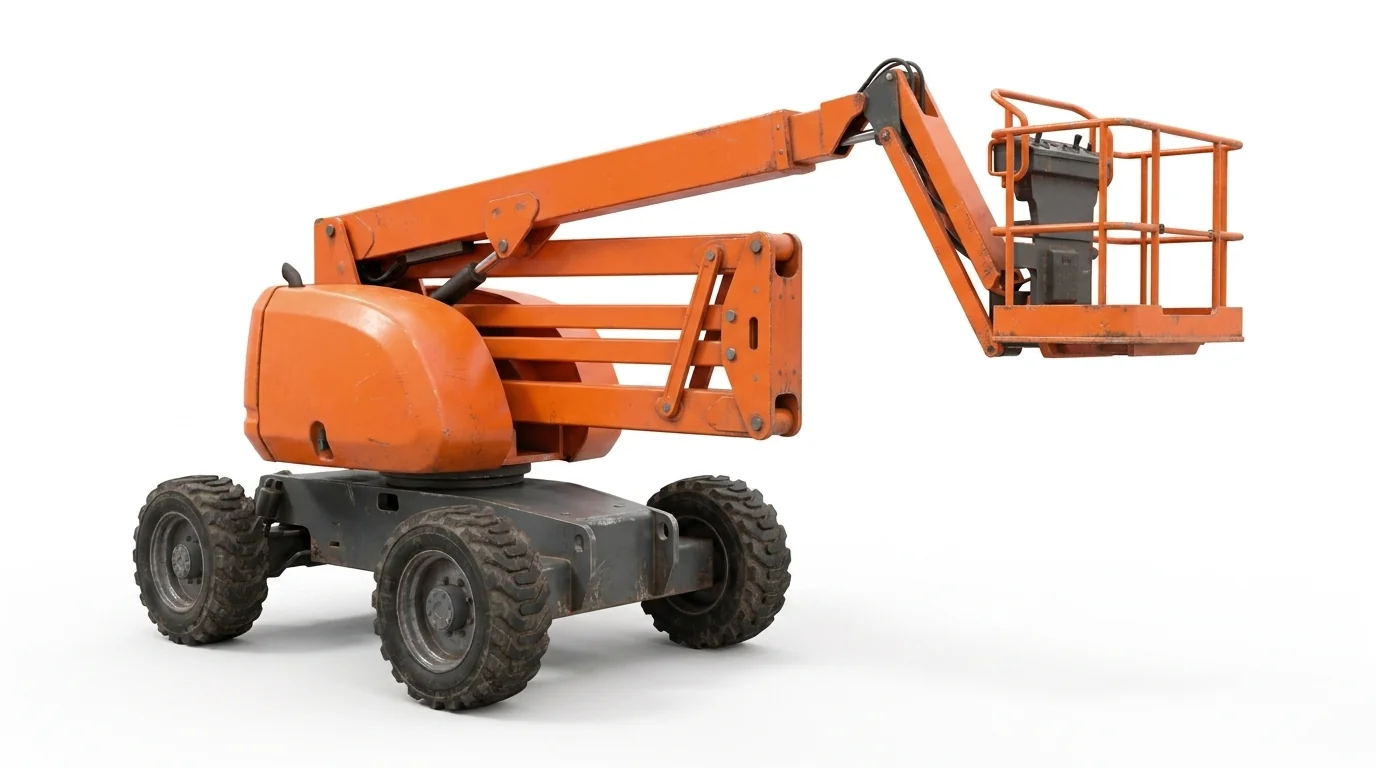
A telescopic boom suits:
- Roof edge work where the unit must sit behind curbs, docks, or landscaping.
- Exterior panel, glazing, or sign work with a direct shot to the face.
- Tall lighting or stack maintenance where height and outreach are both critical.
If the approach is blocked by conveyors, pipe, or overhangs, compare /articulating-boom-lift-rental/ for up‑and‑over geometry.
Surface and weather considerations
Regional temperature swings mean winter projects often move indoors, while spring brings soft ground and slick yards. For outdoor work:
- Rough‑terrain drivetrains and appropriate tread help with uneven, compacted soils.
- Chassis size, axle oscillation, and ground clearance influence access to set‑back pads.
- Actual conditions, the unit’s instructions, and site procedures govern exterior operation.
Measurements that narrow the model
Gather these before selecting a boom:
- Required platform height and horizontal outreach from the planned setup spot.
- Minimum platform capacity for tools and materials.
- Stowed width and tail swing clearance for gates and travel lanes.
- Ground bearing pressure along the travel path and at the pad.
- Power type: diesel for sustained outdoor duty; hybrid or electric for limited-emission zones.
Des Moines facility patterns
Local distribution buildings often require long reaches from paved drives to upper wall penetrations or roof edges. Industrial sites may present compacted clay subgrades that change with thaw and precipitation. Choose reach from the actual setback, not from the building line, and confirm that the pad remains stable through the work window.
Related categories
- Need to reach over obstacles: /articulating-boom-lift-rental/
- General aerial overview: /boom-lift-rental/
- Material placement to elevated decks: /telehandler-rental/
Call
Des Moines Scissor Lift Rentals (515) 416-4577