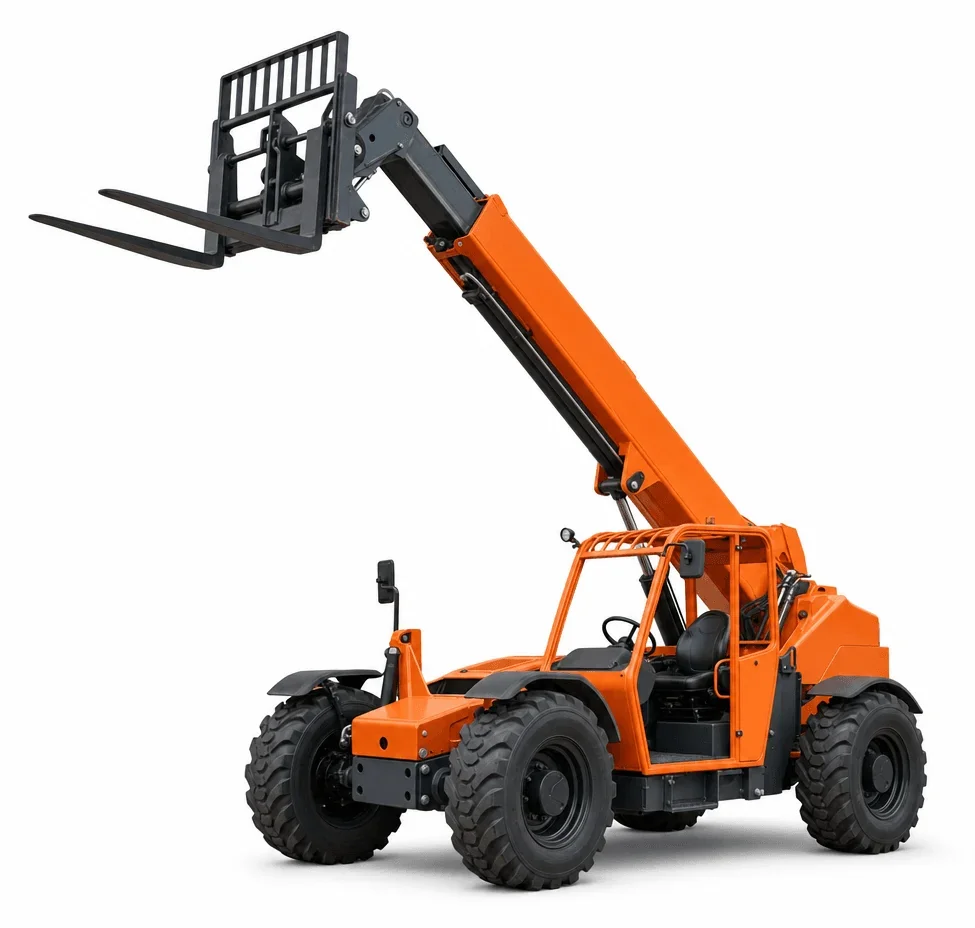
Define the placement geometry
Work backward from the landing spot:
- Height at placement and horizontal offset from where the machine can sit.
- Load weight including pallet, rigging, and attachments.
- Carriage choice for the load type and required fork spacing or tilt control.
If the task is personnel access rather than material placement, compare /telescopic-boom-lift-rental/ or /articulating-boom-lift-rental/.
Site surface and season
Regional freeze–thaw cycles turn compacted yards into variable surfaces. Consider:
- Tire and axle configurations that maintain traction across mixed pavement and soil.
- Ground clearance for transitions between pavement, gravel, and yard entries.
- Visibility and lighting for early starts and low‑light winter windows.
Actual site conditions and procedures govern how and where a telehandler can be used.
Capacity at reach, not just headline numbers
Focus on the load chart where you plan to work:
- Rated capacity at the boom angle and extension needed to clear racking or parapets.
- Stabilizer or frame‑level parameters if applicable to your chosen model.
- Turning radius and overall width for aisle access between racks or containers.
Des Moines facility patterns
Local distribution buildings often run tall, deep racking with narrow aisles. That pushes toward mid‑size units with strong capacity at forward reach and precise inching. Industrial sites with elevated mechanical pads may require longer booms to set equipment from outside curbs or landscaping.
Related categories
- Pallet movement inside on slabs: /forklift-rental/
- Exterior personnel reach: /telescopic-boom-lift-rental/
- Barriers and site control: /temporary-fencing-barricades-rental/
- Storage between delivery and install: /storage-containers-rental/
Call
Des Moines Scissor Lift Rentals (515) 416-4577