Start with location: indoor slab or outdoor yard
- Indoor maintenance bays and equipment rooms favor electric distribution from a stationary generator kept outside the envelope, with cables taking the route least likely to cross lift aisles.
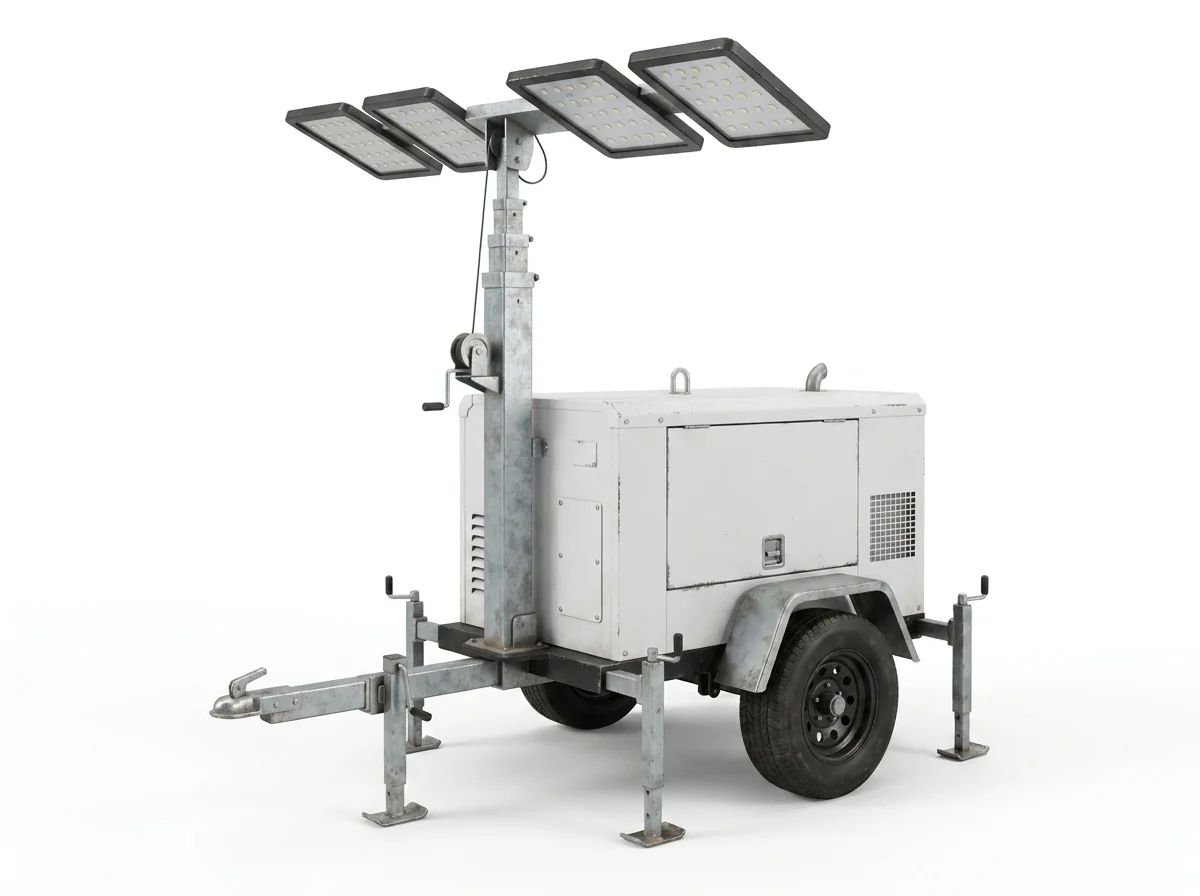
- Outdoor laydown areas at industrial sites may require towable light towers or skid-base generators staged clear of racking installs and truck paths.
In Des Moines, winter closures push more work indoors, while spring projects spill back outside onto soft, compacted soils. The same site can need quiet power for slab work one week and a stable tower on ruts the next.
Surface and routing constraints
- Slab: plan cord sets so they do not create trip lines across scissor lift travel lanes. Note door clearances if the unit must park just outside and feed power in.
- Yard: thaw conditions can produce pumpable mud over firm clay. A wider-stance or skid-base light tower resists sink-in better than a narrow-tire trailer. Confirm the route from drop-off to pad without tight turns that could bog the unit.
Output, noise, and heat load
- Data and controls work inside conditioned spaces usually calls for steady, clean power and low exhaust impact near air intakes. Keep the generator outside with cable runs protected at thresholds.
- Warehouse night shifts need even illumination for racking and pick modules. Light towers with adjustable mast height and aiming help cover long aisles without glare on operators using aerial lifts.
Fuel and runtime planning
- Cold snaps shorten battery performance and increase fuel consumption. Plan for refuel intervals that match shift breaks and access windows.
- Where generators support scissor lifts charging indoors, stage them so cords reach designated charge zones without crossing forklift or telehandler lanes.
Tie-ins with lift work
- If boom lifts or rough-terrain scissor lifts will operate outside, set tower placement upwind of work so light is even and mast swing does not conflict with lift slew.
- For micro-scissor work on raised floors, keep power distribution off the floor grid and route cabling beneath thresholds only where the floor system allows.
Actual site conditions, the selected unit’s instructions, and facility procedures govern final placement and use.
Related comparisons
- Indoor slab work: electric scissor lifts
- Outdoor staging and reach: telescopic boom lifts and forklifts