Fit and floor first
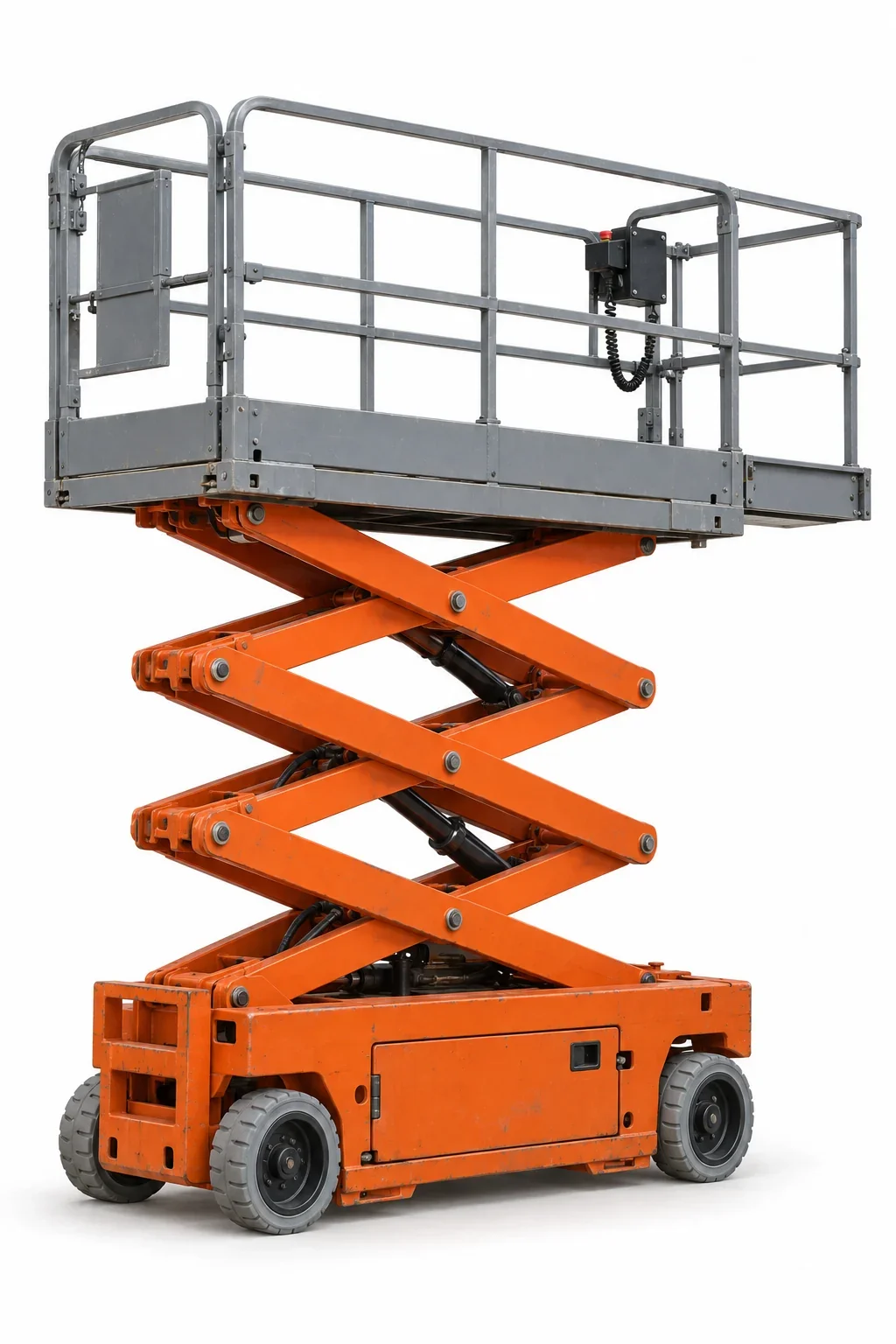
Electric slab scissors live or die on the floor conditions beneath them. Finished concrete, coatings, and raised access floors set limits on weight, point loading, and tire type. In facilities with sensitive floors, compact models with non-marking tires and tighter wheelbases reduce risk and improve turn-in near racks and equipment rows.
Why Des Moines facilities lean electric in winter
Cold snaps keep maintenance inside. Electric units limit emissions and noise, and they maneuver through long corridors and service rows without venting concerns. In technical rooms, air handling clearances, cable trays, and overhead ductwork determine the necessary working height. Measure obstructions as carefully as the task elevation so guardrails clear without contact.
Key dimensions to confirm
- Machine width versus narrowest aisle or corridor
- Stowed height versus doorway, mezzanine, and threshold clearances
- Platform capacity specified by the facility and task
- Floor loading limits for slabs or raised access panels
When an electric scissor isn’t ideal
If the work point sits beyond the platform edge or over equipment, a boom may be a better match. Compare options at /aerial-lift-rental/ and drill down to /boom-lift-rental/ for reach discussions. For very tight single-person access, consider /vertical-mast-lift-rental/.
Typical indoor tasks
- Lighting and sensor swaps along long runs
- Overhead duct and conduit additions
- Rack labeling and low-voltage pulls in aisles
For help matching measurements to a size class, call (515) 416-4577.