Scissor and vertical access
- Electric scissor lifts: best for slab work with tight turning and low noise. Common in interior buildouts and maintenance corridors. See: electric scissor lifts.
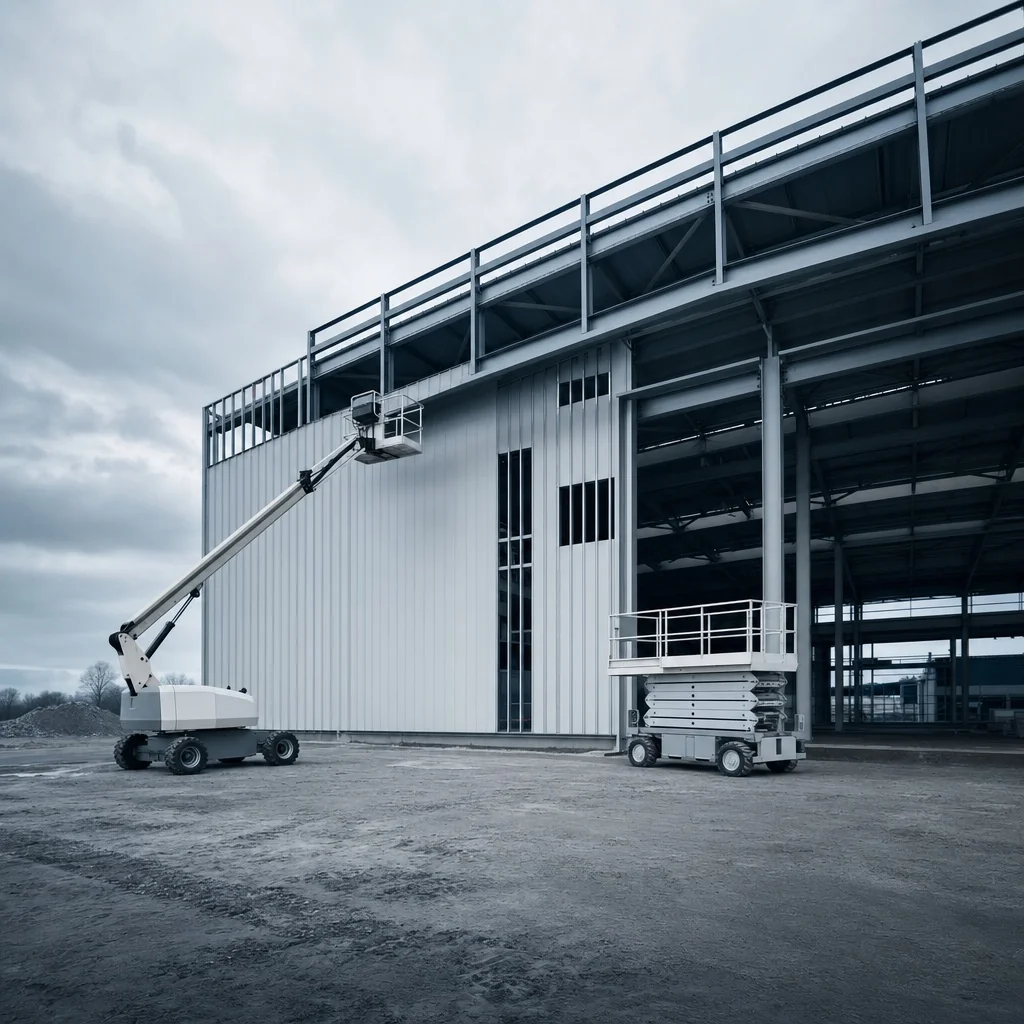
- Rough-terrain scissor lifts: fit outdoor steel, siding, and MEP runs when the site is uneven or thawing. Tire type and platform capacity vary by model. See: rough-terrain scissor lifts.
- Vertical mast lifts: compact footprint for aisle work and sensitive floors, including spaces with raised access systems. See: vertical mast lift rental.
Boom lifts for reach and obstacles
- Articulating booms: get up and over conveyors, racking, or pipe racks common in local distribution buildings. See: articulating boom lifts.
- Telescopic booms: long, straight reach for facades and yard lighting. Need firmer ground or mats during the spring thaw. See: telescopic boom lifts.
- Overview: aerial lift options and boom lifts.
Material handling
- Forklifts: pallet movement on slabs and dock work. Verify aisle widths and turning radii. See: forklift rental.
- Telehandlers: outdoor picks with variable reach for staging steel, duct, and panel bundles. Coordinate with fence gates and container placement. See: telehandler rental.
Site products that shape the work
- Generators and light towers: power and visibility for winter nights and early starts; placement matters in windy, thawing yards. See: generators and light towers.
- Storage containers: protect parts through freeze–thaw cycles and keep tools close to indoor entries. See: storage containers.
- Temporary fencing and barricades: channel traffic around lifts and deliveries as sites move from indoor phases to outdoor work. See: temporary fencing and barricades.
Des Moines factors that narrow choices
- Seasonal swing: Interior winter work favors electric drives and compact footprints; spring exteriors call for rough-terrain platforms and thought-out access routes.
- Ground conditions: Wet, compacted soils need wider stance, mats, or shorter reaches until surfaces stabilize.
- Tech and logistics interiors: Low noise, tight aisles, and sensitive floors make micro and mast platforms useful where a boom cannot sit below the task.
Actual site conditions, the equipment’s instructions, and facility procedures govern selection and use.